

Melaka… A Historic Model of Global Coexistence Among Races and Religions
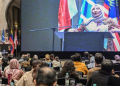
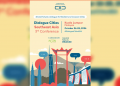
I was visiting the historic city of Melaka to attend the International Interfaith Peace Conference, held under the theme:
“Melaka and Malaysia: A Convergence Point of Faiths, Cultures, Diversity and Harmony Towards Cohesive Nation-Building.”
The conference focused on highlighting Melaka and Malaysia as a meeting point of faith, harmony and diversity, with the aim of fostering a cohesive and united society. It also provided an international platform for sharing experiences in promoting peace and peaceful coexistence, exploring the role of shared values in building bridges of understanding among people of different faiths and cultures, and presenting recommendations to support the development of harmonious and cohesive communities.
Historically, Melaka played a major role in the spread of Islam throughout Southeast Asia, while the Malay language became the region’s lingua franca. The Sultanate of Melaka is regarded as the first Muslim state in the Malay Peninsula, established in 1400. It gained its political and cultural significance from its rich religious and cultural heritage, serving as a gateway for the spread of Islam throughout the Malay Archipelago. The Malay-Islamic culture that developed there became a testament to the region’s civilisation and tradition of interfaith coexistence.
Over the past five centuries, Melaka has remained a city rich in diverse civilisations and cultures. Muslims constitute approximately 69% of its population, followed by Buddhists at 19%, Hindus at 5%, and Christians at 3%, with communities of different faiths living side by side in peace and harmony.
Modern Malaysia has developed a distinctive model of religious coexistence and has placed strong emphasis on strengthening common values among the various components of Malaysian society. The country established a dedicated Ministry of National Unity tasked with promoting unity among its diverse ethnic communities and strengthening social cohesion across society. Malaysia is among the few countries to have a dedicated ministry for national unity and has introduced new national unity policies aimed at strengthening the sense of togetherness and shared national identity.
The International Interfaith Peace Conference provided an important platform for religious leaders, policymakers and civil society representatives from around the world to exchange ideas and strengthen cooperation in the pursuit of peace and social harmony. This reflects Malaysia’s broader aspiration to promote peaceful coexistence across all its cities, supported through significant initiatives and programmes that reinforce the principles of peaceful coexistence among people of different faiths, both nationally and internationally.
Malaysia recognises that diversity should not be viewed as a source of division, but rather as a strength that can be harnessed through mutual respect, openness and cooperation. Such an approach can foster greater mutual understanding among followers of different religions while respecting their differences.
This is an extension of Malaysia’s longstanding commitment to interfaith dialogue and its efforts to counter extremism. Kuala Lumpur has hosted three editions of the International Conference of Religious Leaders, attended by the Malaysian Prime Minister and held under the patronage of the Muslim World League, with thousands of religious figures from dozens of countries participating. These initiatives seek to strengthen harmony among followers of different faiths, address challenges to peaceful coexistence, counter extremist and confrontational narratives, combat hatred directed against particular religions, and promote a better understanding of Islam.
Malaysia has demonstrated that differences can represent diversity rather than contradiction. Its international platforms have showcased best practices in combating Islamophobia, contributing directly to interfaith dialogue, dispelling misconceptions, reducing intolerance and promoting mutual respect among followers of different religions.
These efforts help build bridges of communication between communities and promote human dignity and flourishing in a world increasingly characterised by instability and conflict. Cooperation with international organisations has also played an important role in developing practical initiatives for preventive peace, helping to protect future generations from conflicts and wars fuelled by differences of religion, ethnicity and identity.