


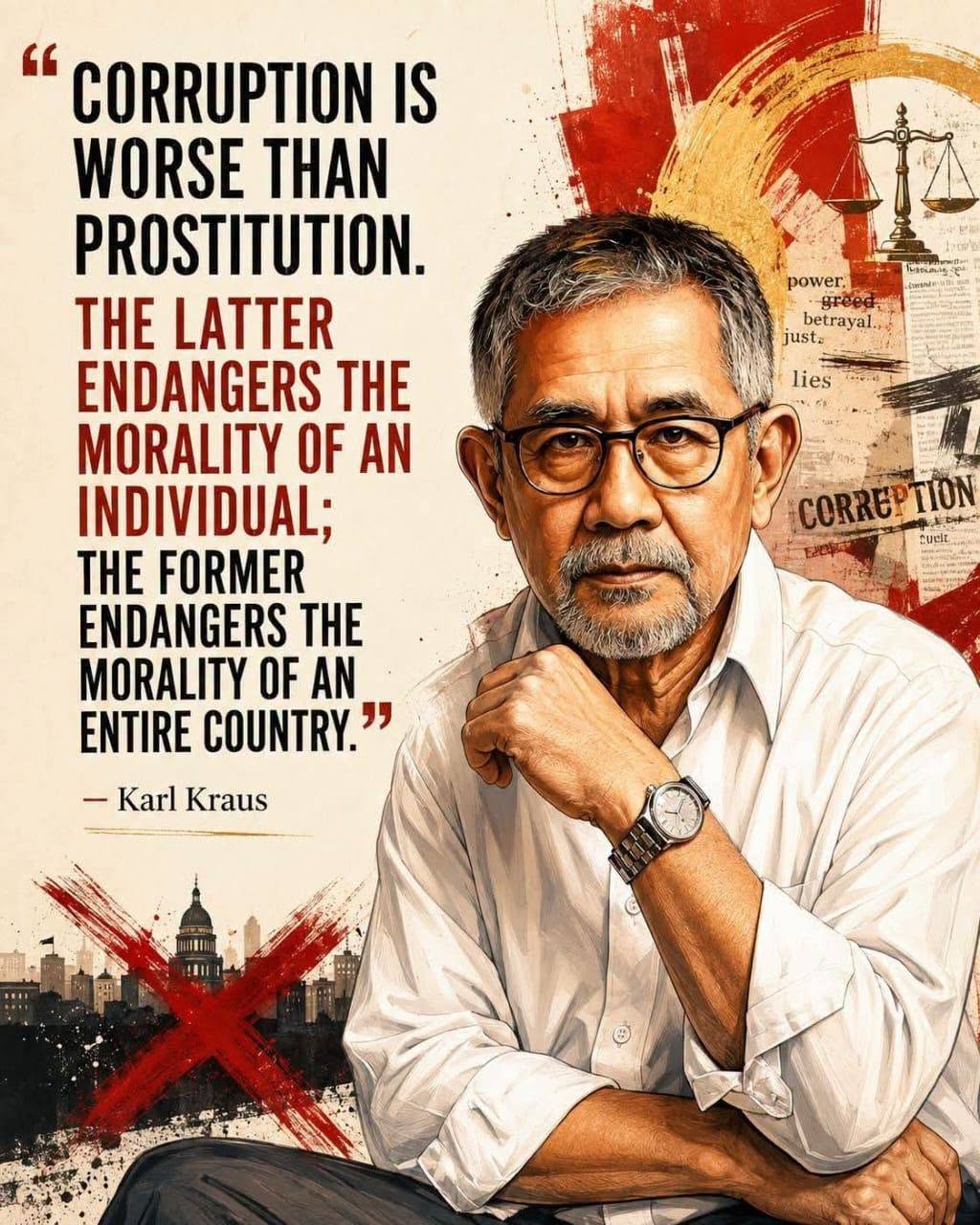
Corruption is a peculiar creature. It rarely enters through the front door wearing a black mask and carrying a sack marked WANG RAKYAT. More often, it arrives smiling politely, sits at the VIP table, shakes a few hands, says “demi rakyat” three times, and somehow leaves with a condominium, a consultancy contract and somebody else’s retirement fund.
That is why the old comparison in the poster bites so hard. Private vice may damage a person, a family, perhaps a reputation. Corruption, however, develops infrastructure. It acquires letterheads, committees, drivers, PowerPoint slides and occasionally a launch ceremony with bunga manggar. Once institutionalised, greed no longer looks greedy; it becomes “facilitation,” “strategic allocation,” “special approval” or that wonderfully Malaysian phrase: “boleh bincang.”
The truly dangerous moment comes when everybody begins adapting to it. The contractor quietly adds the usual percentage. The officer hints without technically asking. The businessman understands without being told. The public sighs, orders another teh tarik and says, “Biasalah.” At that precise moment, corruption has achieved something far more impressive than stealing money: it has persuaded decent people that indecency is simply how things work.
And the bill is never merely RM10 million here or RM100 million there. The real invoice arrives invisibly: a hospital that could have been better equipped, a school that could have been repaired, a road that mysteriously needs repairing again six months after it was repaired the first time, and a generation learning that connections may occasionally outperform competence.
The greatest scandal, therefore, is not that corrupt people steal. Thieves have existed since somebody first invented pockets. The greater scandal is when a society becomes so accustomed to the theft that the thief begins appearing respectable while the person asking awkward questions is considered troublesome.
Malaysia does not need saints running every department. Saints are notoriously difficult to recruit and probably terrible at filling government forms. What it needs is something far less glamorous and considerably more revolutionary: people who understand that public money belongs to the public, public office is a trust, and “everybody does it” has never transformed wrongdoing into virtue.
Because once corruption becomes culture, the country does not merely lose money.
It begins losing its ability to feel ashamed of losing it.